Hormone Supplementation in Rhesus Monkeys Points to Potential Autism Treatment

Catherine Talbot Explains Monkey Model for Understanding the Developmental Disorder

May 9, 2025

4 min


For years, Florida Tech’s Catherine Talbot, assistant professor of psychology, has worked to understand the sociality of male rhesus monkeys and how low-social monkeys can serve as a model for humans with autism. Her most recent findings show that replenishing a deficient hormone, vasopressin, helped the monkeys become more social without increasing their aggression – a discovery that could change autism treatment.


Currently, the Centers for Disease Control and Prevention report that one in 36 children in the United States is affected by autism spectrum disorder (ASD). That’s an increase from one in 44 children reported in 2018. Two FDA-approved treatments currently exist, Talbot said, but they only address associated symptoms, not the root of ASD. The boost in both prevalence and awareness of the disorder prompts the following question: What is the cause?


Some rhesus monkeys are naturally low-social, meaning they demonstrate poor social cognitive skills, while others are highly social. Their individual variation in sociality is comparable to how human sociality varies, ranging from people we consider social butterflies to those who are not interested in social interactions, similar to some people diagnosed with ASD, Talbot said. Her goal has been to understand how variations in biology and behavior influence social cognition.


In the recent research paper published in the journal PNAS, “Nebulized vasopressin penetrates CSF [cerebral spinal fluid] and improves social cognition without inducing aggression in a rhesus monkey model of autism,” Talbot and researchers with Stanford, the University of California, Davis and the California National Primate Research Center explored vasopressin, a hormone that is known to contribute to mammalian social behavior, as a potential therapeutic treatment that may ultimately help people with autism better function in society. Previous work from this research group found that vasopressin levels are lower in their low-social rhesus monkey model, as well as in a select group of people with ASD.


Previous studies testing vasopressin in rodents found that increased hormone levels caused more aggression. As a result, researchers warned against administering vasopressin as treatment, Talbot said. However, she argued that in those studies, vasopressin induced aggression in contexts where aggression is the socially appropriate response, such as guarding mates in their home territory, so the hormone may promote species-typical behavior.


She also noted that the previous studies tested vasopressin in “neurotypical” rodents, as opposed to animals with low-social tendencies.


“It may be that individuals with the lowest levels of vasopressin may benefit the most from it – that is the step forward toward precision medicine that we now need to study,” Talbot said.


In her latest paper, Talbot and her co-authors tested how low-social monkeys, with low vasopressin levels and high autistic-like trait burden, responded to vasopressin supplementation to make up for their natural deficiency. They administered the hormone through a nebulizer, which the monkeys could opt into. For a few minutes each week, the monkeys voluntarily held their face up to a nebulizer to receive their dose while sipping white grape juice – a favorite among the monkeys, Talbot said.


After administering the hormone and verifying that it increased vasopressin levels in the central nervous system, the researchers wanted to see how the monkeys responded to both affiliative and aggressive stimuli by showing them videos depicting these behaviors. They also compared their ability to recognize and remember new objects and faces, which is another important social skill.


They found that normally low-social monkeys do not respond to social communication and were better at recognizing and remembering objects compared to faces, similar to some humans diagnosed with ASD. When the monkeys were given vasopressin, they began reciprocating affiliative, pro-social behaviors, but not aggression. It also improved their facial recognition memory, making it equivalent to their recognition memory of objects.


In other words, vasopressin “rescued” low-social monkeys’ ability to respond prosocially to others and to remember new faces. The treatment was successful – vasopressin selectively improved the social cognition of these low-social monkeys.


“It was really exciting to see this come to fruition after pouring so much work into this project and overcoming so many challenges,” Talbot said of her findings.


One of Talbot’s co-authors has already begun translating this work to cohorts of autism patients. She expects more clinical trials to follow.


In the immediate future, Talbot is examining how other, more complex social cognitive abilities like theory of mind – the ability to take the perspective of another – may differ in low-social monkeys compared to more social monkeys and how this relates to their underlying biology. Beyond that, Talbot hopes that they can target young monkeys who are “at-risk” of developing social deficits related to autism for vasopressin treatment to see if early intervention might help change their developmental trajectory and eventually translate this therapy to targeted human trials.


Catherine F. Talbot is an Assistant Professor in the School of Psychology at Florida Tech and co-director of the Animal Cognitive Research Center at Brevard Zoo.


Dr. Talbot joined Florida Tech from the Neuroscience and Behavior Unit at the California National Primate Research Center at the University of California, Davis, where she worked as a postdoc on a collaborative bio-behavioral project examining naturally occurring low-sociability in rhesus monkeys as a model for the core social deficits seen in people with autism spectrum disorder, specifically targeting the underlying mechanisms of social functioning.


If you're interested in connecting with Catherine Talbot - simply contact Adam Lowenstein, Director of Media Communications at Florida Institute of Technology at adam@fit.edu to arrange an interview today.

You might also like...

Check out some other posts from Florida Tech

3 min

Ape Ancestors and Neanderthals Likely Kissed, New Analysis Finds

Kissing occurs in a variety of animals but presents an evolutionary puzzle: it appears to carry high risks, such as disease transmission, while offering no obvious reproductive or survival advantage. Despite kissing carrying cultural and emotional significance in many human societies, up to now researchers have paid little attention to its evolutionary history. In the new study, “A comparative approach to the evolution of kissing,” published this week in the journal Evolution and Human Behavior, the researchers carried out the first attempt to reconstruct the evolutionary history of kissing using a cross-species approach based on the primate family tree. The results indicate that kissing is an ancient trait in the large apes, evolving in the ancestor to that group 21.5 – 16.9 million years ago. Kissing was retained over the course of evolution and is still present in most of the large apes. The team also found that our extinct human relatives, Neanderthals, were likely to have engaged in kissing too. This finding, together with previous studies showing that humans and Neanderthals shared oral microbes (via saliva transfer) and genetic material (via interbreeding), strongly suggests that humans and Neanderthals kissed one another. “While kissing may seem like an ordinary or universal behavior, it is only documented in 46% of human cultures,” said Catherine Talbot, co-author and assistant professor in the College of Psychology at Florida Tech. “The social norms and context vary widely across societies, raising the question of whether kissing is an evolved behavior or cultural invention. This is the first step in addressing that question.” Matilda Brindle, lead author and evolutionary biologist at Oxford’s Department of Biology, said: “This is the first time anyone has taken a broad evolutionary lens to examine kissing. Our findings add to a growing body of work highlighting the remarkable diversity of sexual behaviors exhibited by our primate cousins.” To run the analyses, the team first defined what constitutes a kiss. This was challenging because many mouth-to-mouth behaviours look like kissing. Since the researchers were exploring kissing across different species, the definition also needed to be applicable to a wide range of animals. They therefore defined kissing as non-aggressive, mouth-to-mouth contact that did not involve food transfer. Having established this definition, the researchers collected data from the literature on which modern primate species have been observed kissing, focusing on the group of monkeys and apes that evolved in Africa, Europe and Asia. This included chimpanzees, bonobos, and orangutans, all of which have been observed kissing. They then ran a phylogenetic analysis, treating kissing as a ‘trait’ and mapping this to the family tree of primates. They used a statistical approach (called Bayesian modelling) to simulate different evolution scenarios along the branches of the tree, to estimate the probability that different ancestors also engaged in kissing. The model was run 10 million times to give robust statistical estimates. Stuart West, co-author and professor of evolutionary biology at Oxford, said, “By integrating evolutionary biology with behavioral data, we’re able to make informed inferences about traits that don’t fossilise – like kissing. This lets us study social behaviour in both modern and extinct species.” While the researchers caution that existing data are limited – particularly outside the large apes – the study offers a framework for future work and provides a way for primatologists to record kissing behaviors in nonhuman animals using a consistent definition.

3 min

Expert Insight: Dampening the Data Desert: A First Step Toward Improving Space Coast Climate Resilience

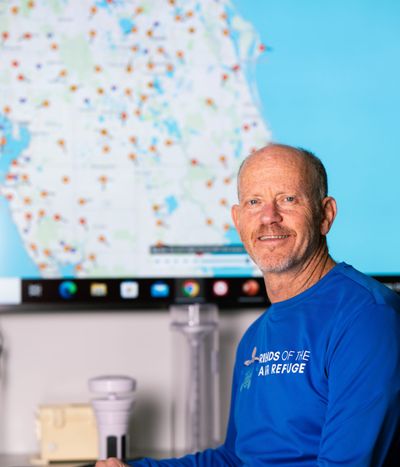
By Steven Lazarus Like many coastal regions, Florida’s Space Coast faces significant climate resilience challenges and risks. According to the National Oceanic and Atmospheric Administration (NOAA), Florida has over 8,000 miles of shoreline, more than any other state in the contiguous U.S. In addition, the 2020 census indicates that that there are 21 million Florida residents, 75-80% of which live in coastal counties. This makes our state particularly vulnerable to rising sea levels, which are directly responsible for a host of coastal impacts, such as saltwater intrusion, sunny-day (high-tide) flooding, worsening surge, etc. There is growing evidence that storms are becoming wetter as the atmosphere warms— increasing the threat associated with compound flooding, which involves the combined effects of storm surge, rainfall, tides and river flow. Inland flooding events are also increasing due to overdevelopment, heavy precipitation and aging and/or inadequate infrastructure. The economic ramifications of these problems are quite evident, as area residents are confronted with the rising costs of their homeowners and flood insurance policies. As the principal investigator on a recently funded Department of Energy grant, Space Coast ReSCUE (Resilience Solutions for Climate, Urbanization, and Environment), I am working with Argonne National Laboratory, Florida Tech colleagues, community organizations and local government to improve our climate resilience in East Central Florida. It is remarkable that, despite its importance for risk management, urban planning and evaluating the environmental impacts of runoff, official data regarding local flooding is virtually nonexistent! Working alongside a local nonprofit, we have installed 10 automated weather stations and manual rain gauges in what was previously a “data desert” east of the Florida Tech campus: one at Stone Magnet Middle School and others at local homes. “We think that a ‘best methods’ approach is proactive, informed and cost-effective. The foundation of good decision-making, assessment and planning is built on data (model and observations), which are critical to adequately addressing the impact of climate on our communities.” – steven lazarus, meteorology professor, ocean engineering and marine sciences Data from these stations are available, in real-time, from two national networks: CoCoRaHS and Weather Underground. The citizen science initiative involving the rain gauge measurements is designed to document flooding in a neighborhood with limited resources. In addition to helping residents make informed choices, these data will also provide a means by which we can evaluate our flood models that will be used to create highly detailed flood maps of the neighborhood. We are working with two historic extreme-precipitation events: Hurricane Irma (2017) and Tropical Storm Fay (2008)—both of which produced excessive flooding in the area. What might the local flooding look like, in the future, as storms become wetter? To find out, we plan to simulate these two storms in both present-day and future climate conditions. What will heat stress, a combination of temperature and humidity, feel like in the future? What impact will this have on energy consumption? The station data will also be used develop and test building energy-efficiency tools designed to help the community identify affordable ways to reduce energy consumption, as well as to produce high-precision urban heat island (heat stress) maps that account for the impact of individual buildings. The heat island and building energy modeling will be complemented by a drone equipped with an infrared camera, which will provide an observation baseline. We think that a “best methods” approach is proactive, informed and cost-effective. The foundation of good decision-making, assessment and planning is built on data (model and observations), which are critical to adequately addressing the impact of climate on our communities.

4 min

Simulations of Exoplanet Formation May Help Inform Search for Extraterrestrial Life

Florida Tech astrophysicist Howard Chen is offering new insights to help aid NASA’s search for life beyond Earth. His latest theoretical work investigates the TRAPPIST-1 planetary system, one of the most widely studied exoplanetary systems in the galaxy. It has captured scientists’ attention for its potential to host water, and thus possibly life, on its planets. Now, he’s offering an explanation for why telescopes have yet to find definitive signs of either. The paper “Born Dry or Born Wet? A Palette of Water Growth Histories in TRAPPIST-1 Analogs and Compact Planetary Systems” was authored by Chen, an assistant professor of space sciences, and researchers from NASA, Johns Hopkins University and Harvard University, was published in The Astrophysical Journal Letters in September. It explores the likelihood that TRAPPIST-1’s three innermost exoplanets contained no water when they formed, despite existing in a zone where water is viable. TRAPPIST-1 is a red dwarf star located about 40 light-years away from us. (One light year is about 6 trillion miles.) It is thought to be about 7.6 billion years old, or 3 billion years older than our Sun. Astronomers are captivated by the TRAPPIST-1 system because its seven known planets are rocky and Earth-like. They also fall within the star’s habitable zone: the distance range from a star at which temperatures are not too hot or cold to support liquid water. Researchers are searching for any evidence of water on these planets, but have yet to detect anything. Some think a lack of gas in the atmosphere is disrupting the light needed to pick up detailed visuals. Others predict water could have escaped the planets’ atmospheres throughout their evolution. Chen and his team, however, decided to research a different theory: that there was no water to begin with because there was no gas to contain it. He would test it not from an observational perspective, but with mathematical modeling of the planets’ initial formation. “You have astronomers who are using telescopes to see what’s out there. I come from a different perspective,” Chen said. “I’m both trying to explain what we’re seeing while trying to make predictions about what we can’t.” The researchers created models that examined the composition and growth of these planets starting when they were as small as one kilometer wide. They simulated how material aggregated during collisions with other celestial objects until they reached their final planetary formations. There are several key factors in collision events that heavily influence a planet’s final composition. Chen’s models incorporated impact delivery, which is the transfer of materials like water and gases during a celestial collision; impact erosion, which refers to the removal of materials in a planet’s atmosphere due to impact; and mantle-atmosphere exchange, which is the transfer of water and gases between a planet’s atmosphere and mantle to maintain its conditions. The team ran hundreds of collision simulations, which returned thousands of different possibilities for how TRAPPIST-1’s planets might have formed. They varied several components, such as the amount of water available to the system, the profile of the initial planet formation environment, the planets’ density profiles and the initial system conditions. For the inner worlds, specifically the first three planets, most of the simulations came back dry. “Whatever we did, we couldn’t get much water in these inner planets,” Chen said. He believes that the main reason the planets couldn’t acquire water is due to the nature of the collision events. Compact planet collisions are higher velocity, so they are more aggressive and energetic, Chen said. This means that instead of acquiring material for a gaseous atmosphere, planets’ atmospheres were completely cleared out by the power of the collisions. With no gas in the atmosphere to contain water, it’s possible that any previously existing water escaped back into space during these collision events. Understanding a planet’s earliest characteristics, its water, air and carbon content, builds the foundation for how they evolve. That way, when researchers identify a planet that seems viable for life at the surface level, they can use Chen’s model to simulate what these distant worlds might be like on the inside, on the surface and in the air. Combining the theoretical context of a planet’s formation with the state in which it was discovered can help researchers – and NASA – make informed, efficient decisions on which planets are worth investigating and when it’s time to move on to the next. If you're interested in connecting with Howard Chen about the search for life beyond Earth, let us help. Contact Adam Lowenstein, Assistant Vice President for External Affairs at Florida Institute of Technology, at adam@fit.edu to arrange an interview today.

View all posts